
Mental Health Support for Chronic Illness
Mental Health, Chronic Illness, Invisible Illness
Supporting Your Mental Health While Living With Chronic or Invisible Illness
Living with a chronic or invisible illness can feel like carrying a weight no one else can see. While doctors may focus on test results and treatment plans, your mental health deserves equal care and attention. This guide is for individuals navigating life with ongoing health challenges, and for anyone who loves and supports them.
The Hidden Emotional Load of Chronic and Invisible Illness
Chronic illness brings more than physical symptoms. It can disrupt your work, relationships, finances, and sense of identity. When your condition is invisible—like chronic pain, autoimmune disorders, fatigue syndromes, or mental health conditions themselves—you may also face disbelief, judgment, or minimization from others. That lack of visible proof can make you question your own experience and feel guilty for needing rest or support.
Over time, this hidden emotional load can lead to anxiety, depression, burnout, and isolation. Supporting your mental health is not a luxury or a sign of weakness; it is a crucial part of managing your condition and protecting your quality of life.
Validating Your Experience: You Are Not Imagining This
One of the hardest parts of living with an invisible illness is feeling like you must constantly justify how unwell you are. You might look “fine” on the outside, yet be exhausted, in pain, or overwhelmed inside. It is common to wonder if you are being “dramatic” or “lazy,” especially if others question your limitations.
Start by giving yourself the validation you may not always receive from others. Your symptoms are real. Your fatigue is real. Your grief for the life you once had is real. Acknowledging this truth is the first step in supporting your mental health, because it replaces self-blame with self-compassion.
💡 Gentle Reminder: You do not need visible proof for your pain to be valid. Your lived experience is enough.
Everyday Strategies to Support Your Mental Health
Build a realistic “good day” and “bad day” plan. On better days, it can be tempting to push yourself to “catch up.” Instead, decide in advance what a sustainable level of activity looks like, so you do not crash later. On harder days, give yourself permission to scale back without guilt.
Practice pacing and gentle boundaries. Saying no, leaving early, or choosing rest over plans is not selfish—it is symptom management. Protecting your energy is a mental health strategy as much as a physical one.
Create small daily anchors. A short breathing exercise, a few minutes of journaling, or stepping outside for fresh air can help you feel more grounded, even when your body is unpredictable.
Limit unhelpful comparisons. Social media and well-meaning friends can make you feel behind or “less than.” Remember that your life has different constraints and needs. Your progress may be slower and more cyclical—and that is still progress.
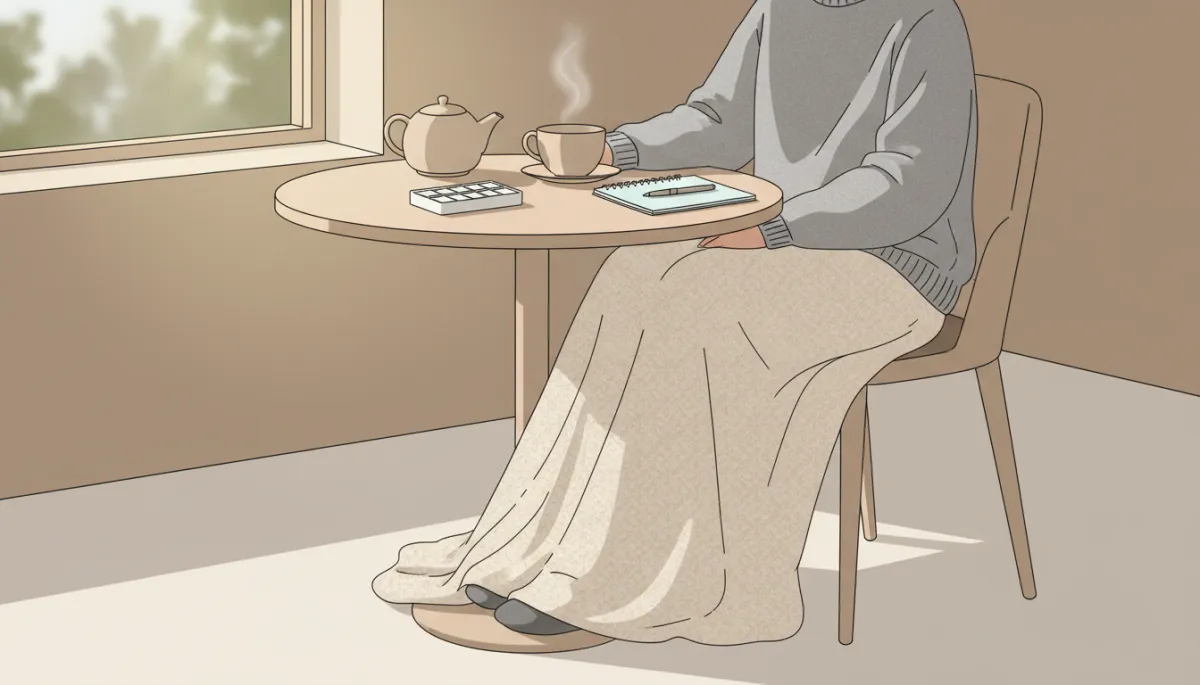
Gentle daily rituals can create stability when symptoms and energy levels fluctuate.
Finding Support That Truly Understands You
You deserve support from people who take your chronic or invisible illness seriously. This might include a therapist familiar with health-related anxiety and grief, a support group for your specific condition, or online communities where others share similar experiences. Hearing, “I feel that too,” can be deeply healing when you have felt alone for a long time.
If you are a friend or family member of someone with chronic illness, simple actions matter: believe them, ask what support feels helpful, and avoid offering quick fixes. Sometimes the most powerful words are, “I believe you, and I am here with you.”
Allowing Yourself to Redefine Strength
Strength with chronic or invisible illness does not always look like pushing through. Often, it looks like listening to your body, asking for help, adjusting your expectations, and choosing kindness toward yourself when you cannot meet old standards. Supporting your mental health is not about “staying positive” all the time; it is about making space for your full emotional reality and building tools to carry you through it.
You are doing something incredibly hard: living each day with challenges most people never see. Your feelings are valid, your limits are real, and your well-being matters. Taking your mental health seriously is one of the most compassionate choices you can make for yourself as you navigate life with chronic or invisible illness.